Vientiane · Laos
Buddha Park (Wat Xieng Khouane Luang)
When concrete gives shape to the gods, and the Mekong banks hum a rhapsody.
Discover Vientiane, Laos's most surreal garden — over 200 giant sculptures blending Buddhism and Hinduism, on the Mekong's south bank.
Vientiane attractions
Buddha Park
Wat Xieng Khouane Luang · ວັດຊຽງຄູນ
Soft sunset
Sun & sky planner
Times are estimates for the park's location
Live data from Open-Meteo at the park's coordinates
About the park
Where the Mekong meets 200 statues
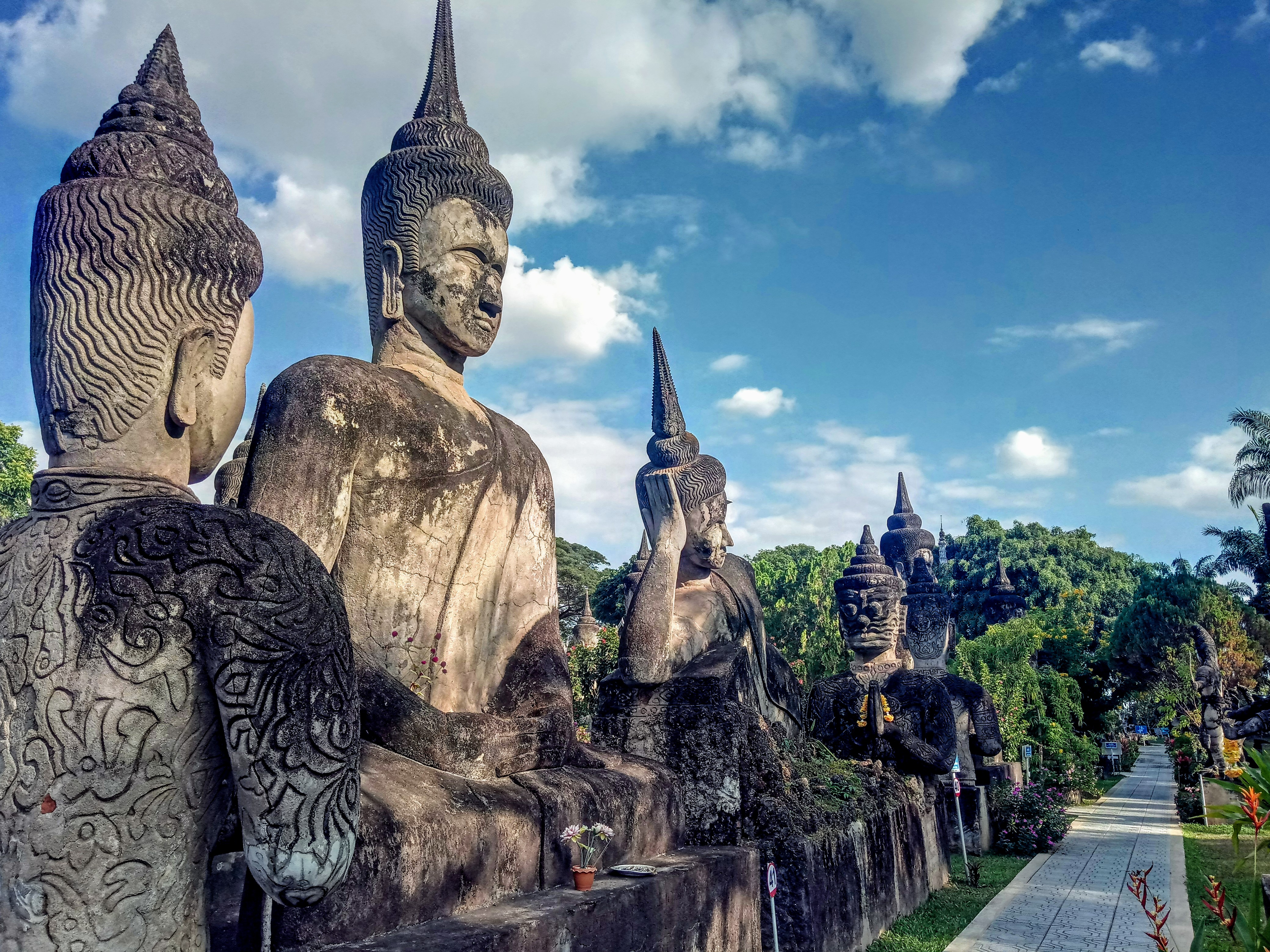
Buddha Park (Wat Xieng Khouane Luang) is a sculptural garden on the eastern bank of the Mekong, just outside Vientiane — a quiet, otherworldly place where Buddhism and Hinduism share the same lawn.
The park was founded in 1958 by Luang Pu Bunleua Sulilat, a mystic priest who studied both Buddhist and Hindu teaching. He gathered local craftsmen to mould more than 200 statues in reinforced concrete, blending the two faiths into one riverside garden.
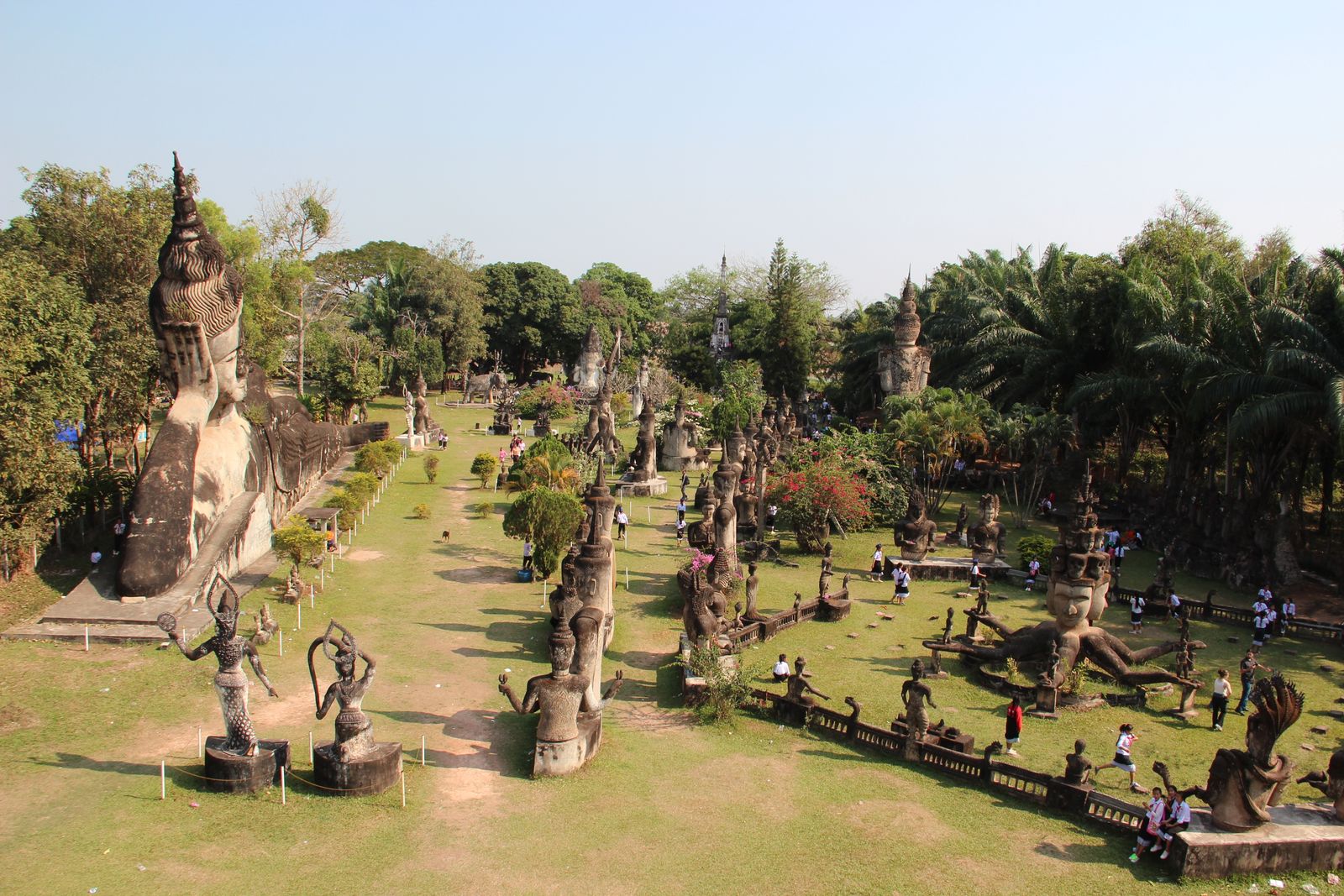
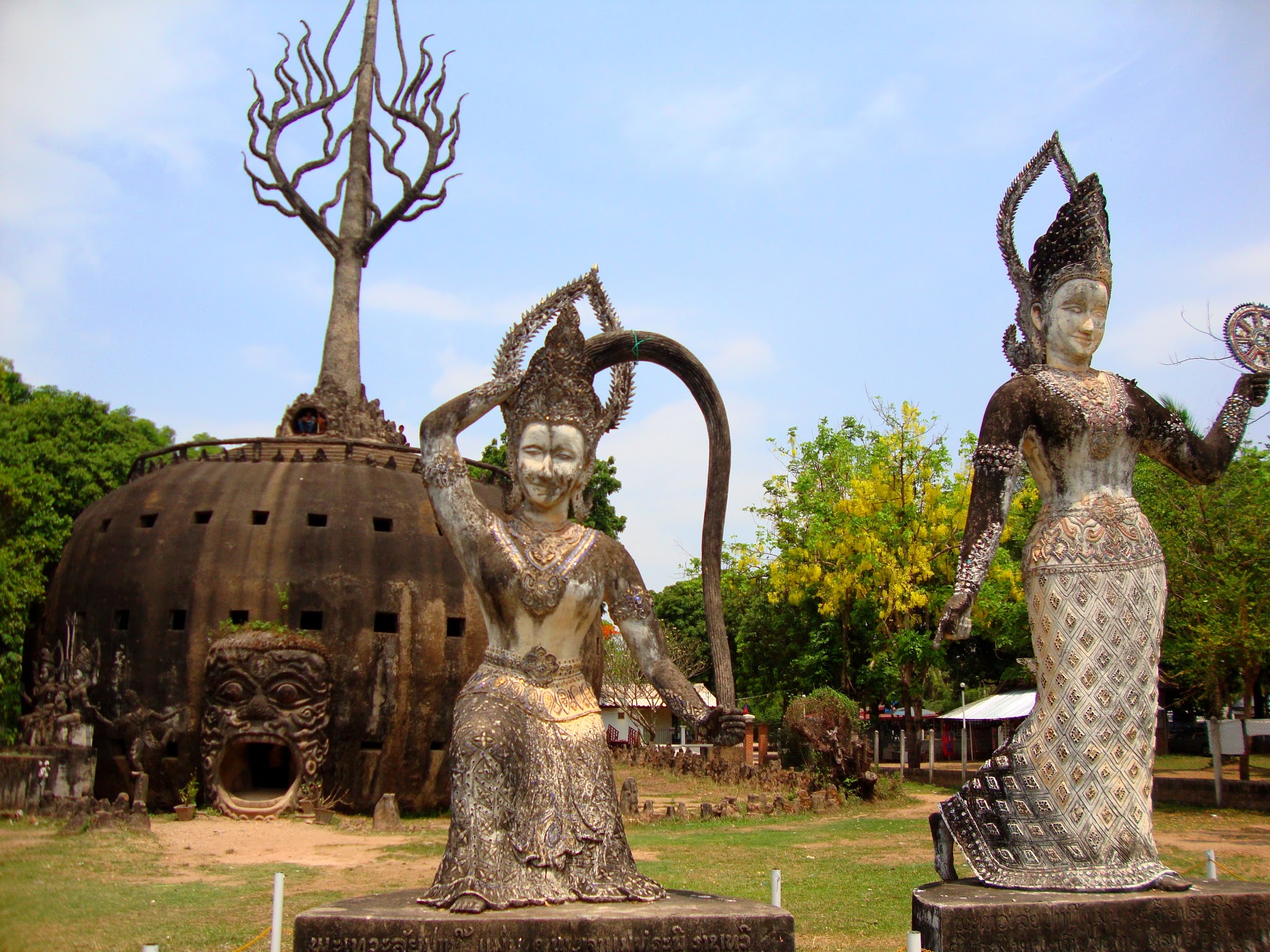
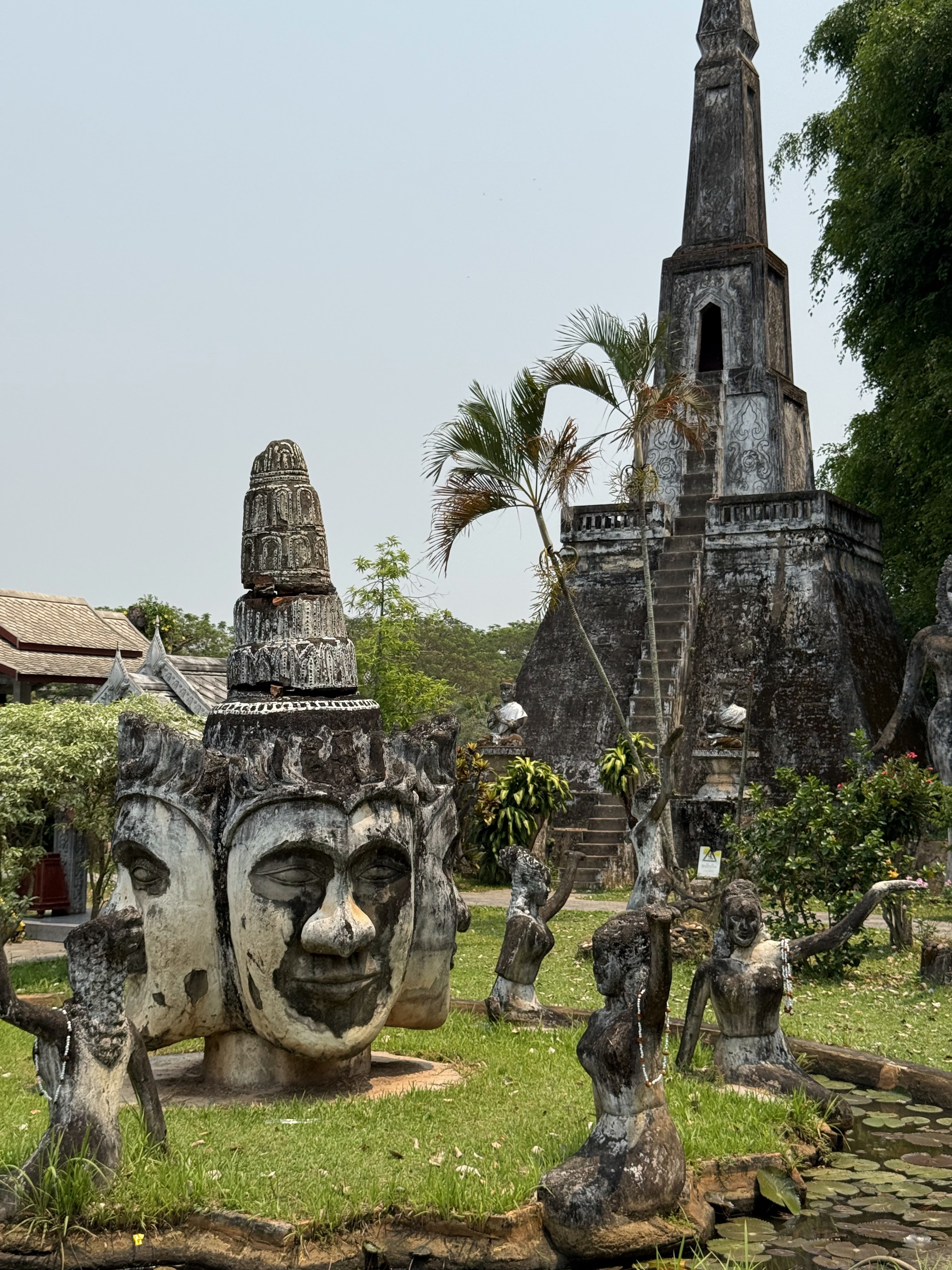
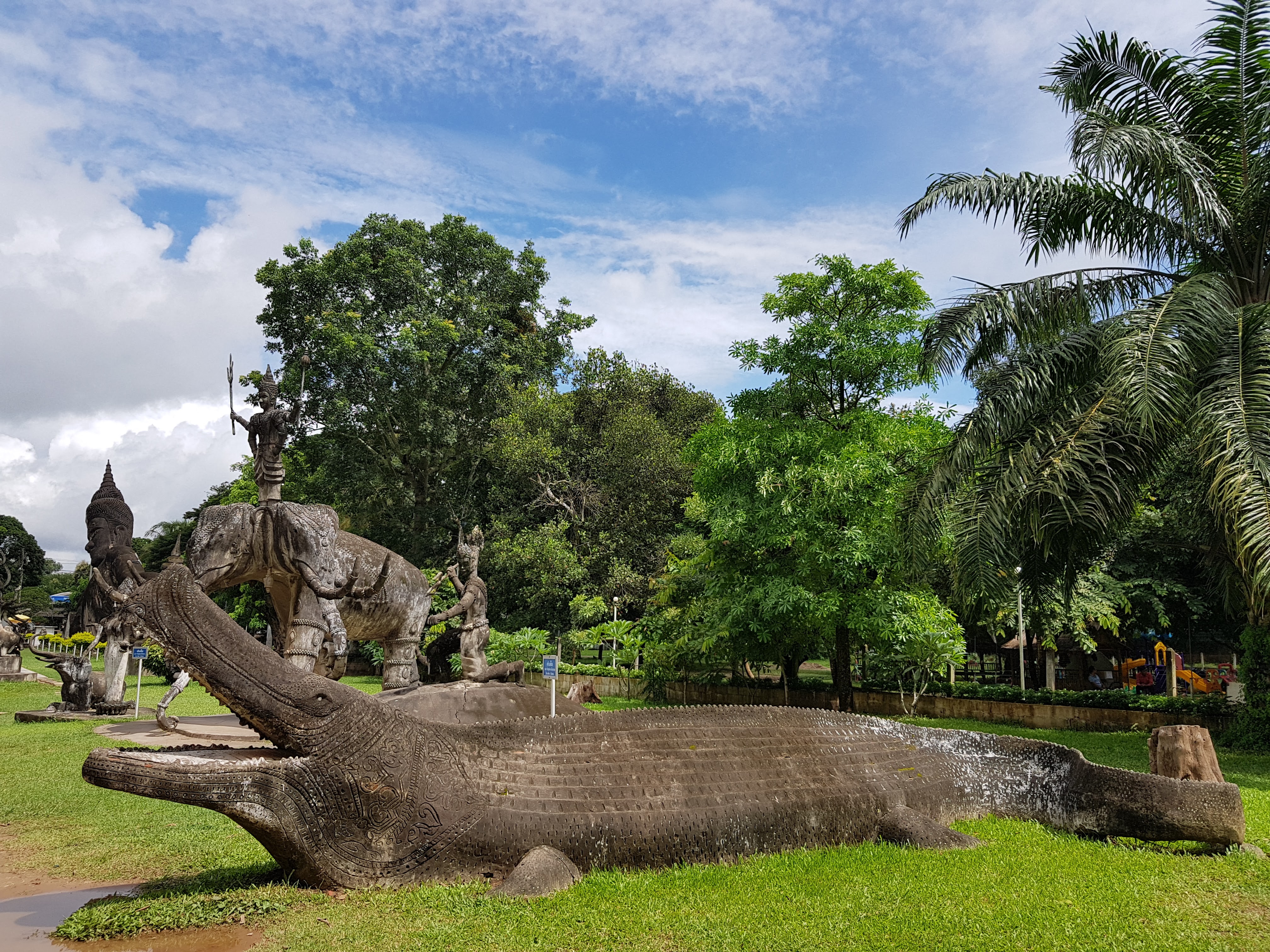
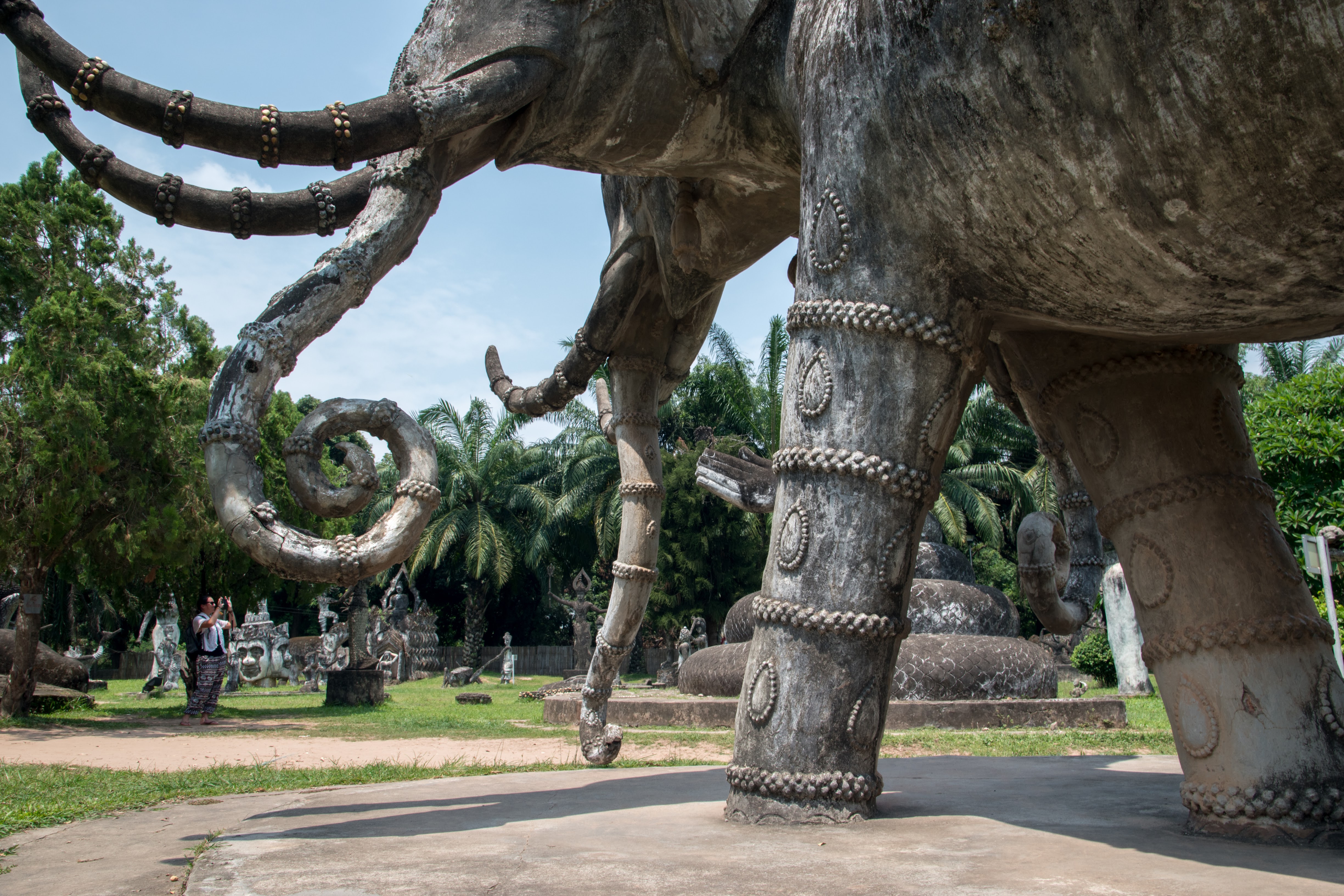
Today Buddha Park is one of Vientiane's most surreal stops. Wandering between a 40-metre reclining Buddha, a giant pumpkin you climb from Hell to Heaven, and a three-headed elephant is unlike anywhere else in Laos.
“Walk slowly — the park reveals itself one statue at a time.”
Arrive around 08:30 to beat the heat and group tours, then linger until the light softens.
See full guide →Visitor guide
Everything you need before you go
Straightforward, useful advice for a relaxed half-day at Buddha Park.
Two ways to enjoy it
Pick your pace — wander slowly or climb the pumpkin.
Pace:Easy· Flat paths
Families, photographers
Stroll between statues, rest in the shade, watch the Mekong.
Pace:Easy· Three floors
First-timers, curious minds
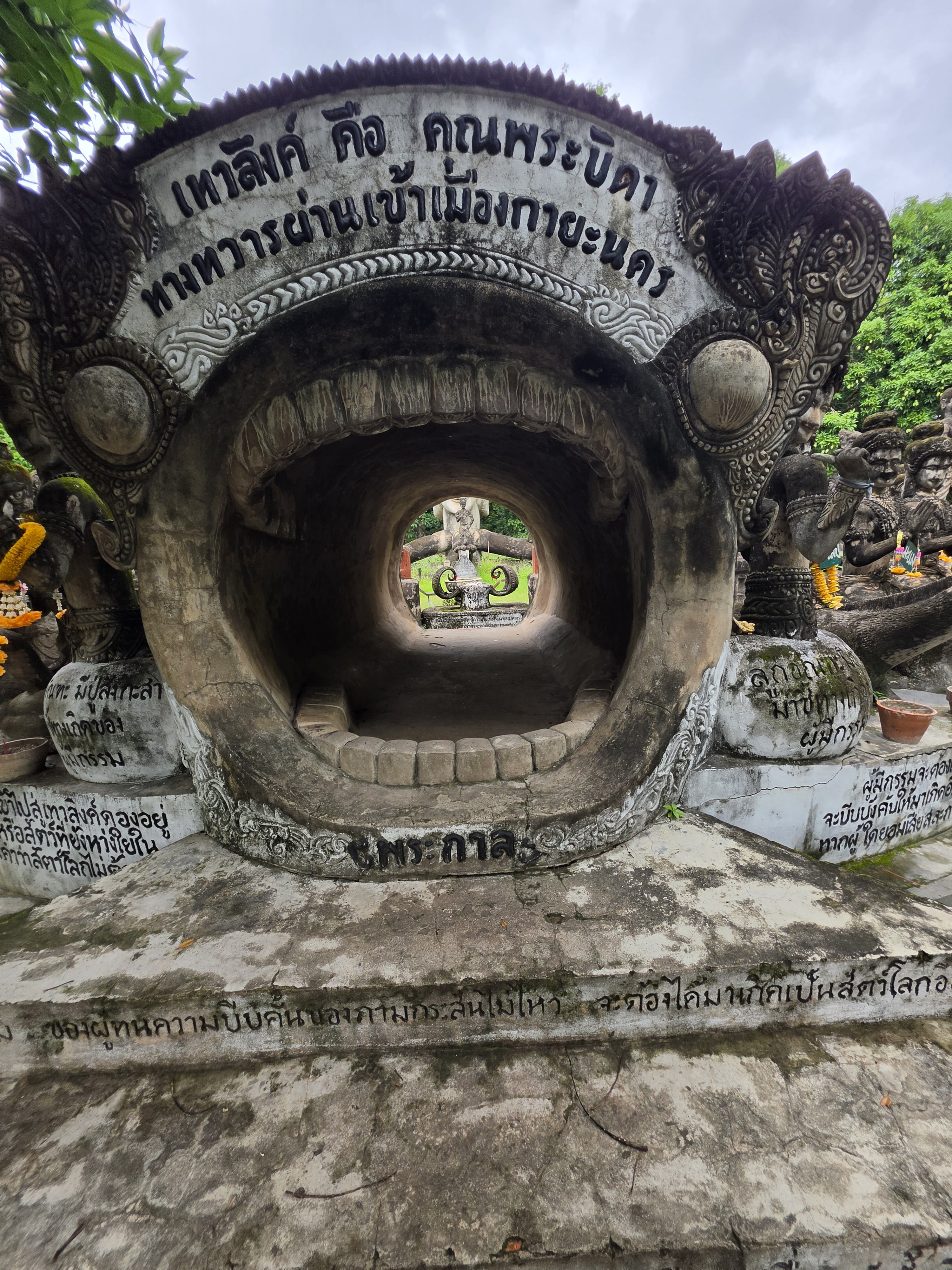
Enter the demon's mouth and climb from Hell to Heaven for the rooftop view.
⚠️ Straight talk
Entry fees are posted at the gate — pay at the booth and keep small cash for the camera fee and drinks.
08:00 – 17:00 (daily)
- Opens08:00
- Best light08:00 – 10:00
- QuietestMorning
- Closes17:00
Costs
- EntryAbout 15,000 LAK for foreign visitors
- Camera feeAround 5,000 LAK if you bring a camera
- Food & drinksSmall stalls sell water and snacks
Ticket prices may be adjusted slightly by local policy; we recommend carrying some Thai baht (THB) or Lao kip (LAK) cash.
How to reach Buddha Park
- From VientianeAbout 25 km east of the centre; tuk-tuk or bus toward the Thai–Lao Friendship Bridge.
- Local busPublic buses run from the capital's bus stations to the Deua / Friendship Bridge road.
- From Nong Khai, ThailandCross the river by the Friendship Bridge, then continue to the park on the Lao side.
- Bus No. 14From Talat Sao Bus Terminal in Vientiane, take Bus No. 14 — its final stop is Buddha Park. Fare is about 6,000 LAK, the cheapest and most classic public transport for backpackers.
- From Wattay International Airport (VTE)Wattay International Airport is about 30 km from the park. Take an airport taxi or a ride-hailing app to the city or the park (around 40–60 min), or save money by heading to Talat Sao first and catching Bus No. 14.
Photography guide
The park is most photogenic in soft morning light.
Best light
~08:00–09:30 — warm light on the statues and river
~18:00–18:40 — soft sky before closing
07:30–08:30 — mist and few people
Photo spots
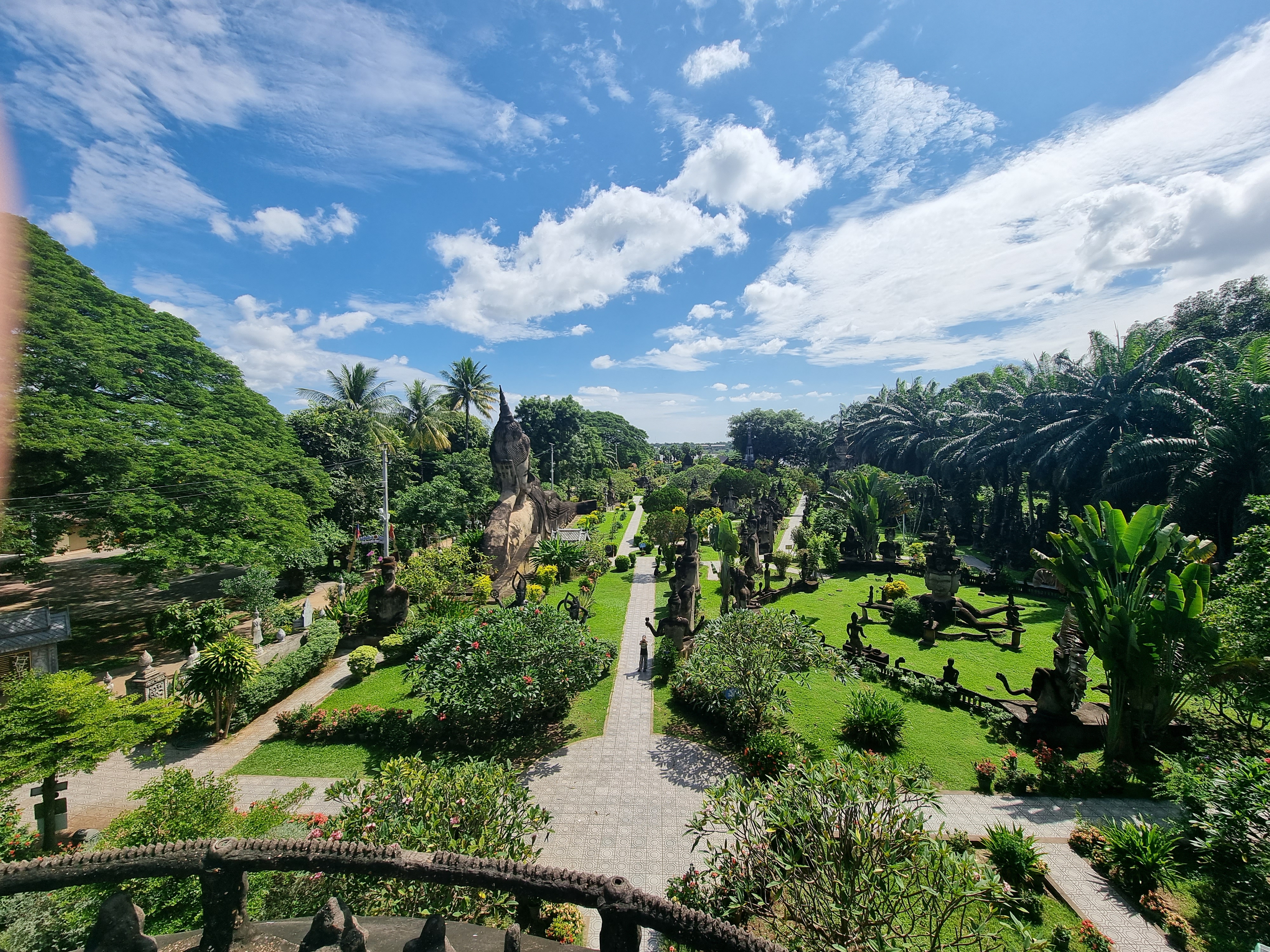
Rooftop view over the park and Mekong
Climb before the crowds
40-metre silhouette
Shoot low from the side
The park's emblem
Use a wide angle
Camera settings
f/8, ISO 100, 1/250s
Tap to expose for the sky, enable HDR
f/5.6, ISO 400, 1/60s
Night mode, hold steady 2–3s
Polariser, low tripod
Get close to the water's edge
Quick tips
- Arrive 30 min after opening
- Shoot toward the open river
- Wipe the lens if there's mist
- Respect the quiet of the shrines
Best time to visit
Vientiane has three seasons that change the park's mood.
Cool season
Pleasant mornings and the clearest light — the most comfortable time to walk.
Hot season
Very warm; come in the first hours to avoid the heat.
Wet season
Green lawns and few visitors, but afternoon rain may shorten a visit.
Safety
- Near statues — Some concrete is old; don't climb fragile figures.
- The pumpkin stairs — Steps are narrow inside; hold the rail and watch your head.
- Personal items — Keep bags close at the busy gate area.
🌫️ Hot & smoky months
March–April can be very hot and hazy; travellers sensitive to heat may prefer December–January.
Accessible for everyone
The main lawns are flat with few steps.
- Wheelchairs & prams — Flat paths around most of the lawn.
- Resting — Shaded benches and a small café.
- Toilets — Public facilities near the entrance.
Frequently asked questions
What are the opening hours of Buddha Park? +
The park is open daily about 08:00–17:00. Mornings are coolest and quietest.
Is there an entry fee? +
Yes — about 15,000 LAK for foreign visitors, plus around 5,000 LAK if you bring a camera.
How do I get there from Vientiane? +
It's about 25 km east of the centre; take a tuk-tuk or public bus toward the Friendship Bridge.
Is the giant pumpkin worth climbing? +
Yes — the three-storey sphere climbs from Hell to Heaven, with a rooftop view over the Mekong.
Is it good for families? +
Very — flat lawns, a riverside walk and the playful statues, but watch children on the narrow pumpkin stairs.
History
From a monk's vision to a riverside park
The story of Buddha Park is the story of one man's unusual faith — built in concrete on the banks of the Mekong.
Luang Pu Bunleua Sulilat
In 1958 the mystic figure Luang Pu Bunleua Sulilat founded the park. No ordinary monk, he was a shamanic recluse who blended Hinduism and Buddhism — legend says that as a young man he fell into a cave and was tutored by a Hindu hermit, setting him on a spiritual path outside orthodox religion, fusing the two faiths into one riverside garden.
A garden of two faiths
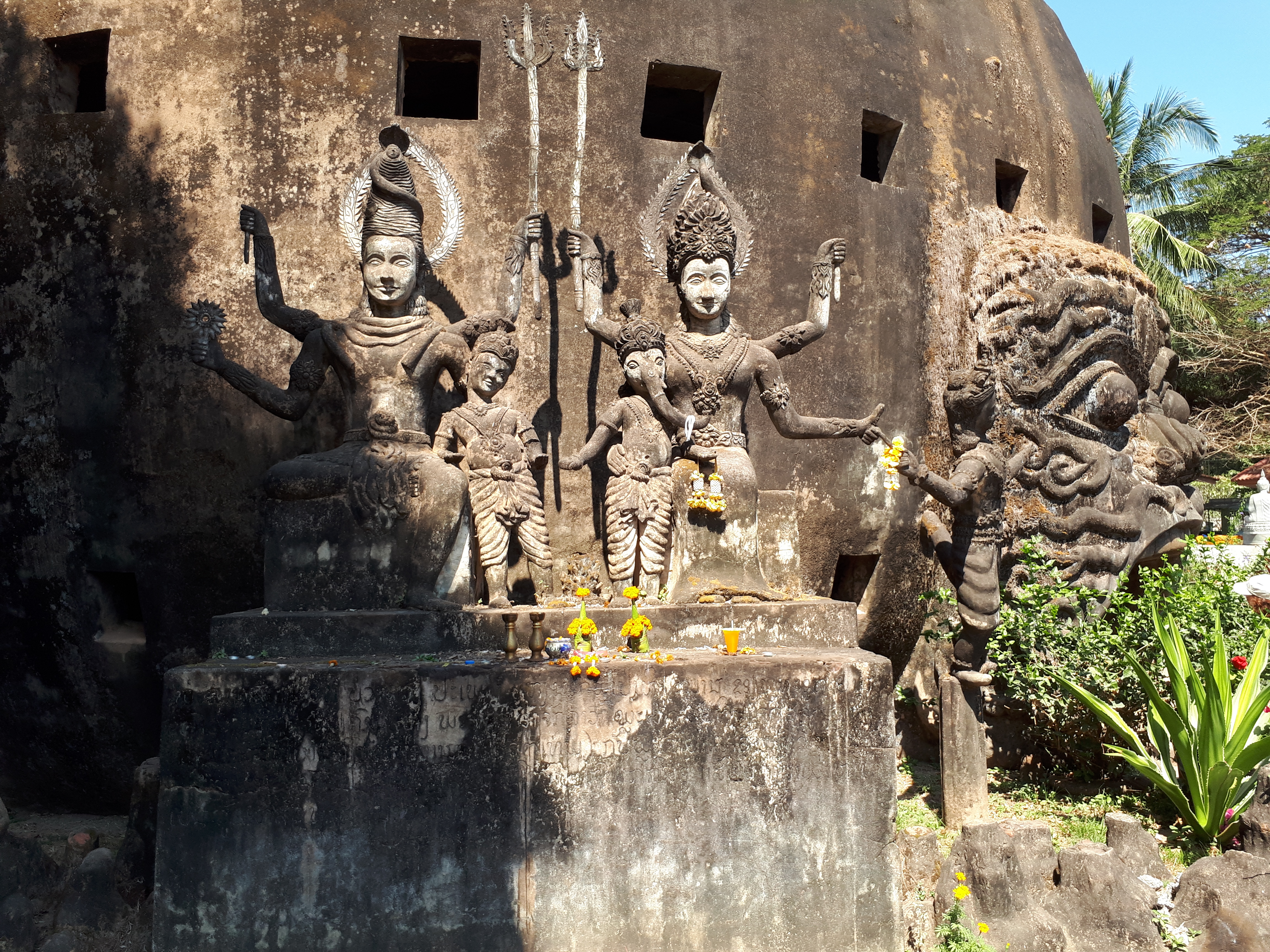
Over the following years more than 200 figures were cast in concrete — Buddhas, Avalokiteshvara, Shiva, Vishnu, Brahma, Rama and Hanuman sharing the same lawns.
Today
After decades the park remains a relaxed, slightly surreal stop on Vientiane's eastern edge, drawing travellers who cross the river from Thailand's Nong Khai.
A sister park across the river
In 1975, as Laos came under communist rule, Bunleua Sulilat crossed the Mekong to Thailand. In Nong Khai he built Sala Keoku — a sibling sculpture park born of the same vision. One river, two banks, two parks shaped by the same hand.
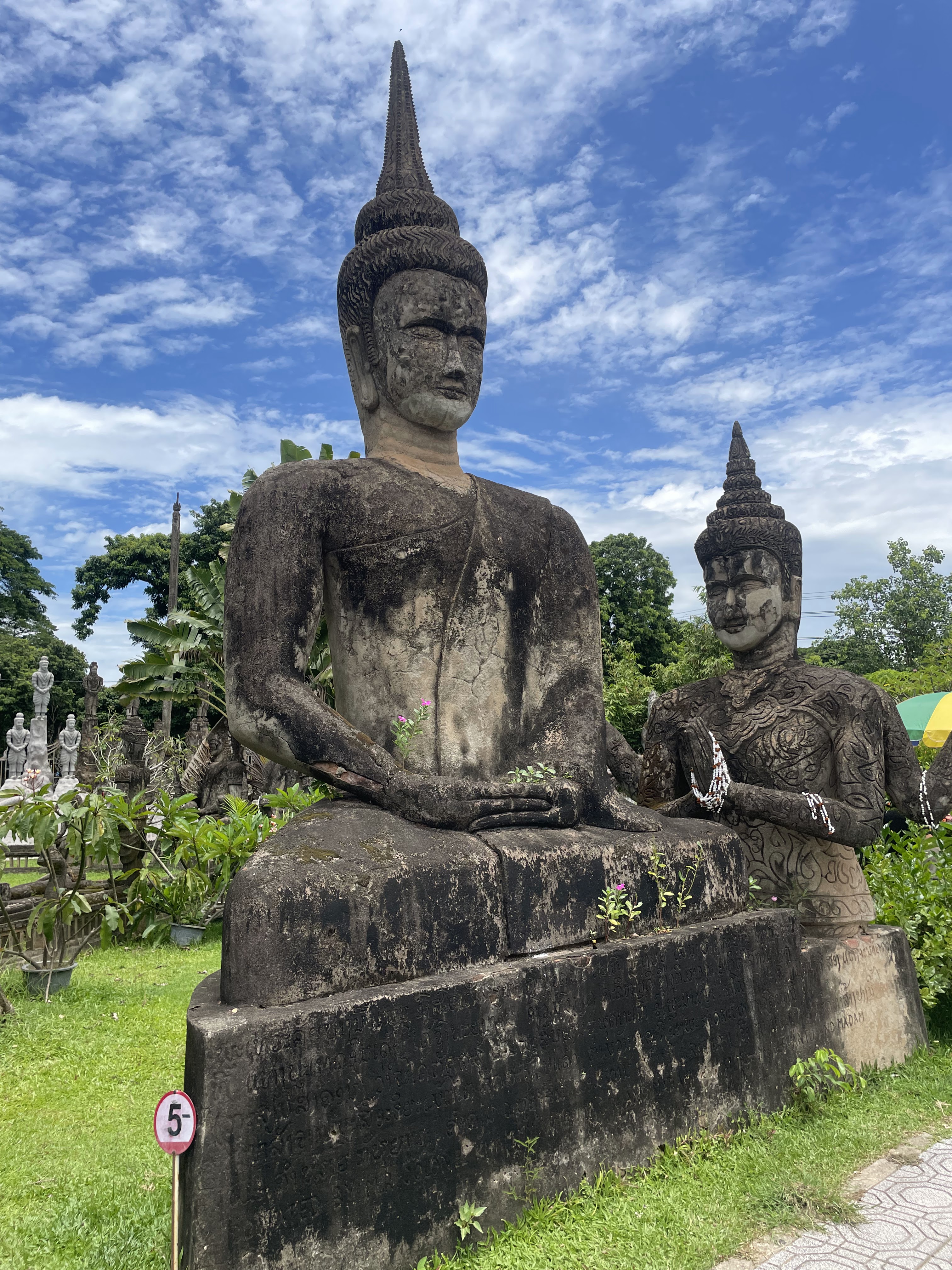
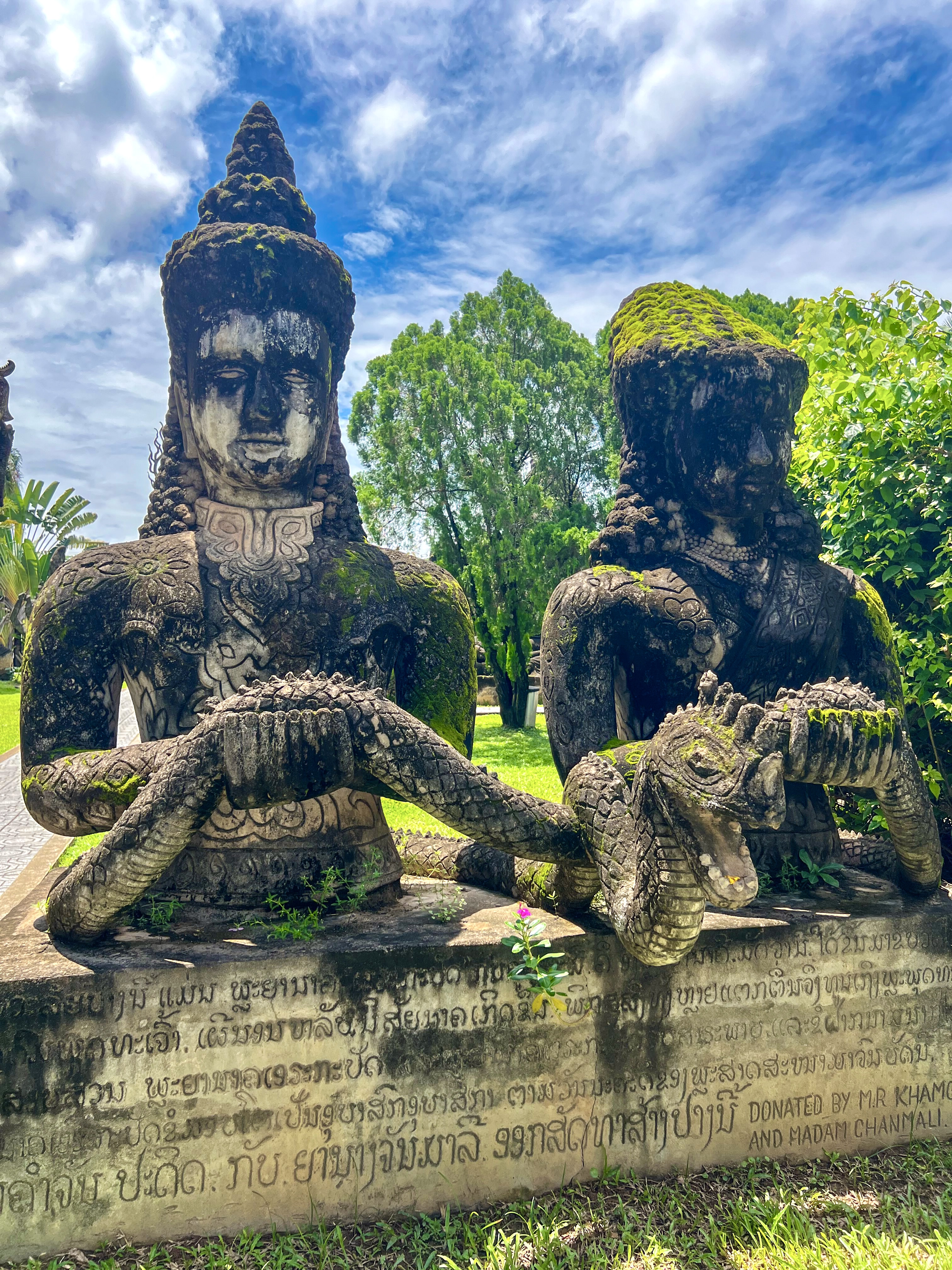
Drag the slider to compare the park's wide view and a statue up close
The meaning of 'Xieng Khouane'
Locals call it Wat Xieng Khouane. In Lao, Xieng means 'sacred city / city' and Khouane means 'soul / spirit', so the full name translates as 'City of Spirits'. It marks the park's identity as a 'city of statues' while hinting at the animist folk beliefs woven through it.
Did you know?
The giant Pumpkin Tower (also the 'Three Realms Tower') is a three-storey sphere that mirrors the Buddhist cosmology of the 'Three Realms (Traiphum)': enter through a demon's mouth, climb narrow steps in the dark through Hell and the human world, and finally emerge into light at the top — overlooking the whole spirit-city by the Mekong, a symbol of transcending the cycle of rebirth.
Concrete Brutalist Aesthetics
These colossal figures were not finely carved in marble but cast on-site in industrial reinforced concrete. The raw textures and exaggerated proportions express a mid-20th-century Lao folk-art brutalism that is rough yet full of vitality — giving Buddha Park its one-of-a-kind surreal landscape.
A place of spirits
In Lao folk belief the Mekong is home to spirits (Phi). Small shrines near the water ask for safety and luck — a quiet tradition elders still remember.
A note on respect
If you see a small shrine or offerings by the water, admire from a distance and do not disturb them.
A mystic fate across one river
In 1975 Luang Pu crossed the Mekong to Nong Khai, Thailand, and built the sister park Sala Keoku. One master, two parks, facing each other across the river.
Riverbank & nature
Life along the Mekong
“A quiet garden by a living river — treat it as you would a temple.”
Buddha Park sits on the edge of the Mekong. Mornings bring mist off the water; the lawns and shaded trees are home to birds and lizards between the statues.
Weather & the river
The river breeze keeps the park pleasant before the midday heat.
Ponds and borders filter the air and shelter small creatures.
The Mekong rises in the wet season (May–Oct) and falls in the dry.
Plants in the park
Sacred in Buddhism, blooming at dawn on the still ponds.
- Pink lotus — Common around the quiet southern ponds
- White lotus — Opens midday, folds before dusk
Big trees cool the lawns where visitors rest.
- Rain tree — Wide canopy, popular shade at noon
- Bamboo — Rustles in the river breeze
Wildlife you might see
- Herons stalking the shallows
- Water monitors on the bank
- Dragonflies over the ponds
- Kingfishers along the river
- Small turtles near the water's edge
Leave no trace
Help keep the park clean for the next visitor and for the local community.
Tick off each item as you walk — small acts keep a 200-statue park peaceful
What to look for by season
Things to spot through the year
🗓 Year-round, best at dawn
Common in calm water
🗓 Cool mornings
Fairly common
🗓 After rain, May–Oct
Common in wet season
Food & drinks
Eat by the river
The park keeps it simple — a few stalls and a café rather than a night market.
Cold drinks from the stalls — welcome in the midday heat.
Local snacks and fruit near the entrance.
A simple pho-style bowl at the small café.
Sweet iced coffee to round off the walk.
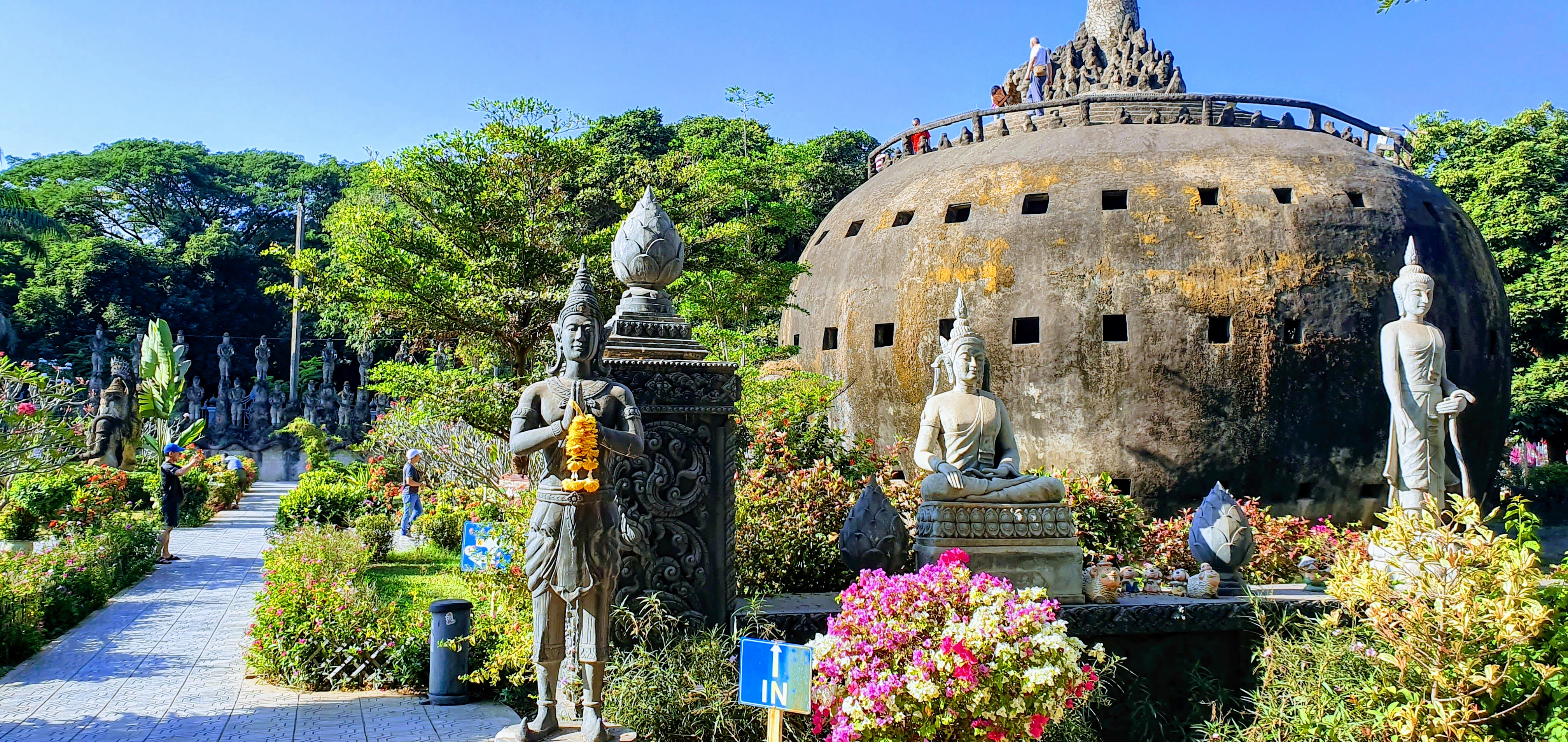
“The best break at Buddha Park is a cold drink under the shade trees.”
Gallery
Moments in the park
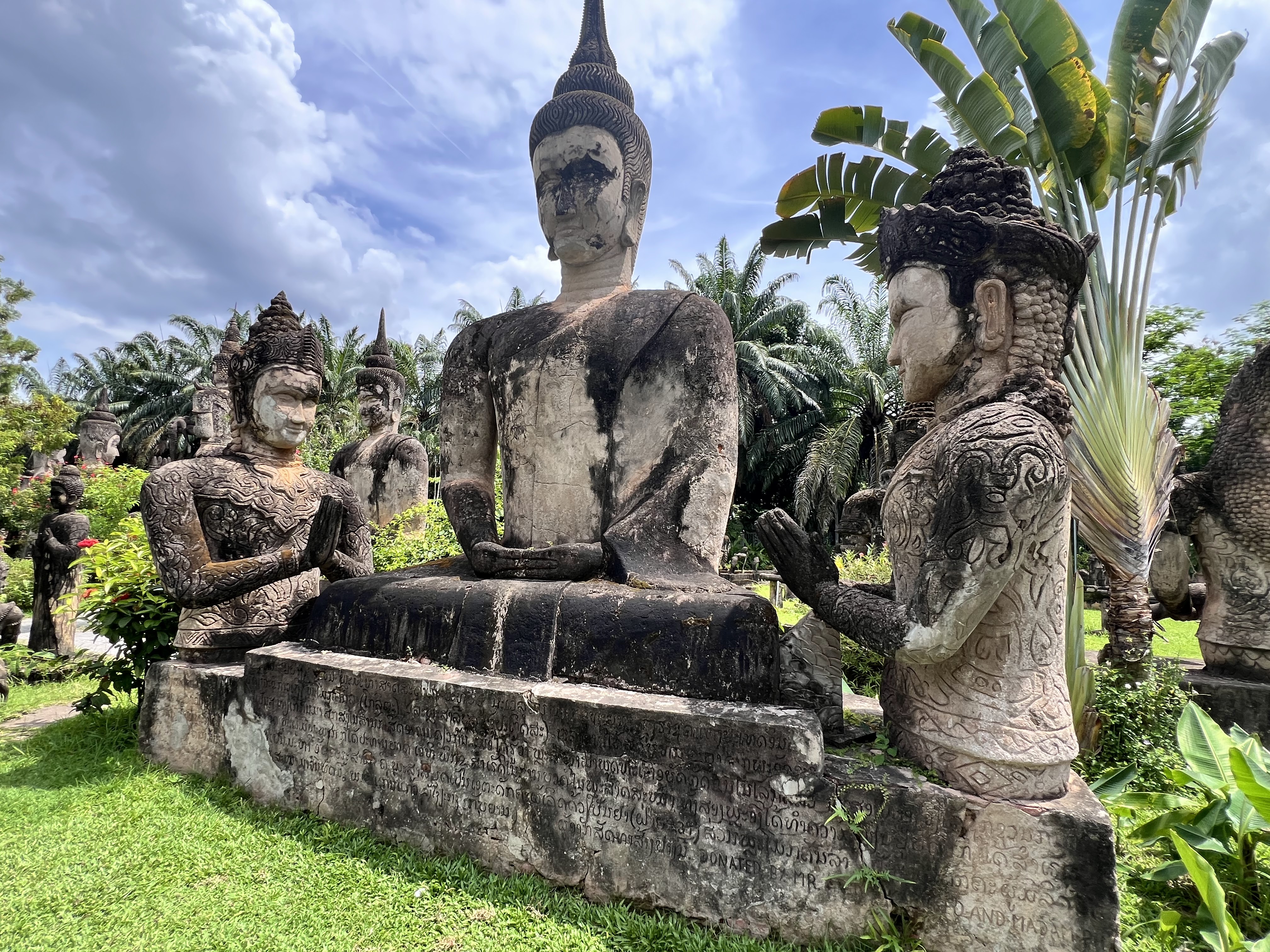
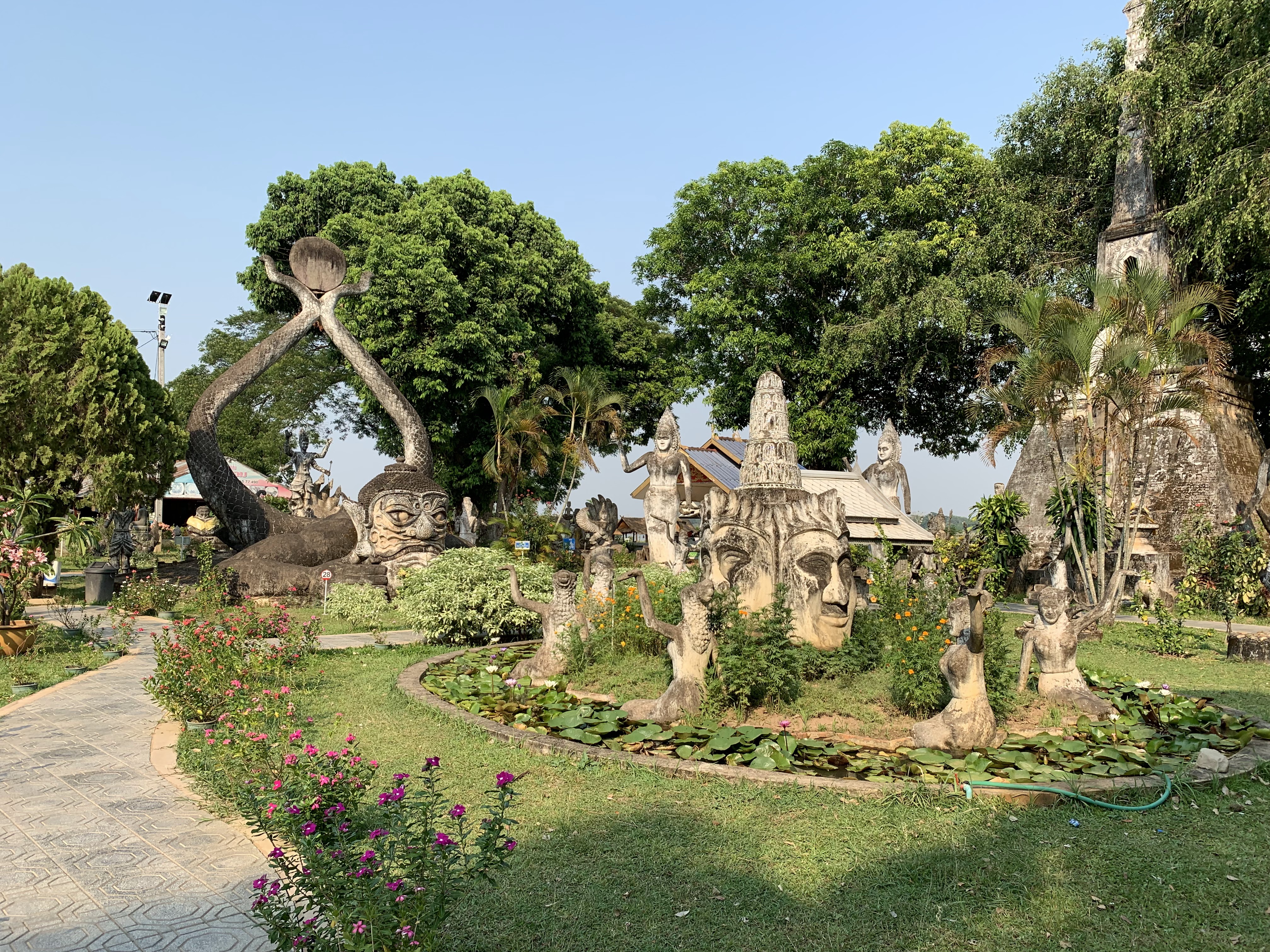
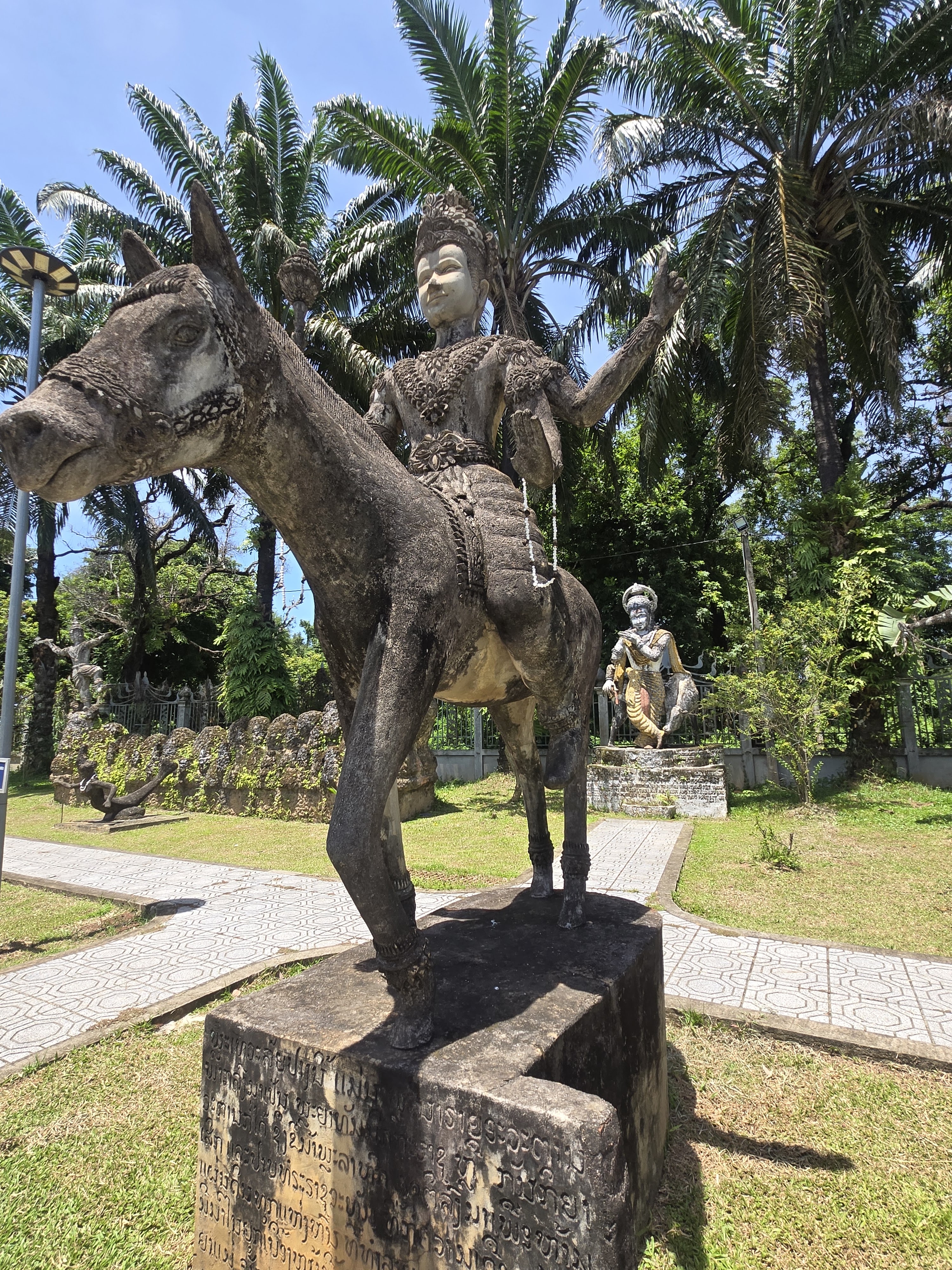
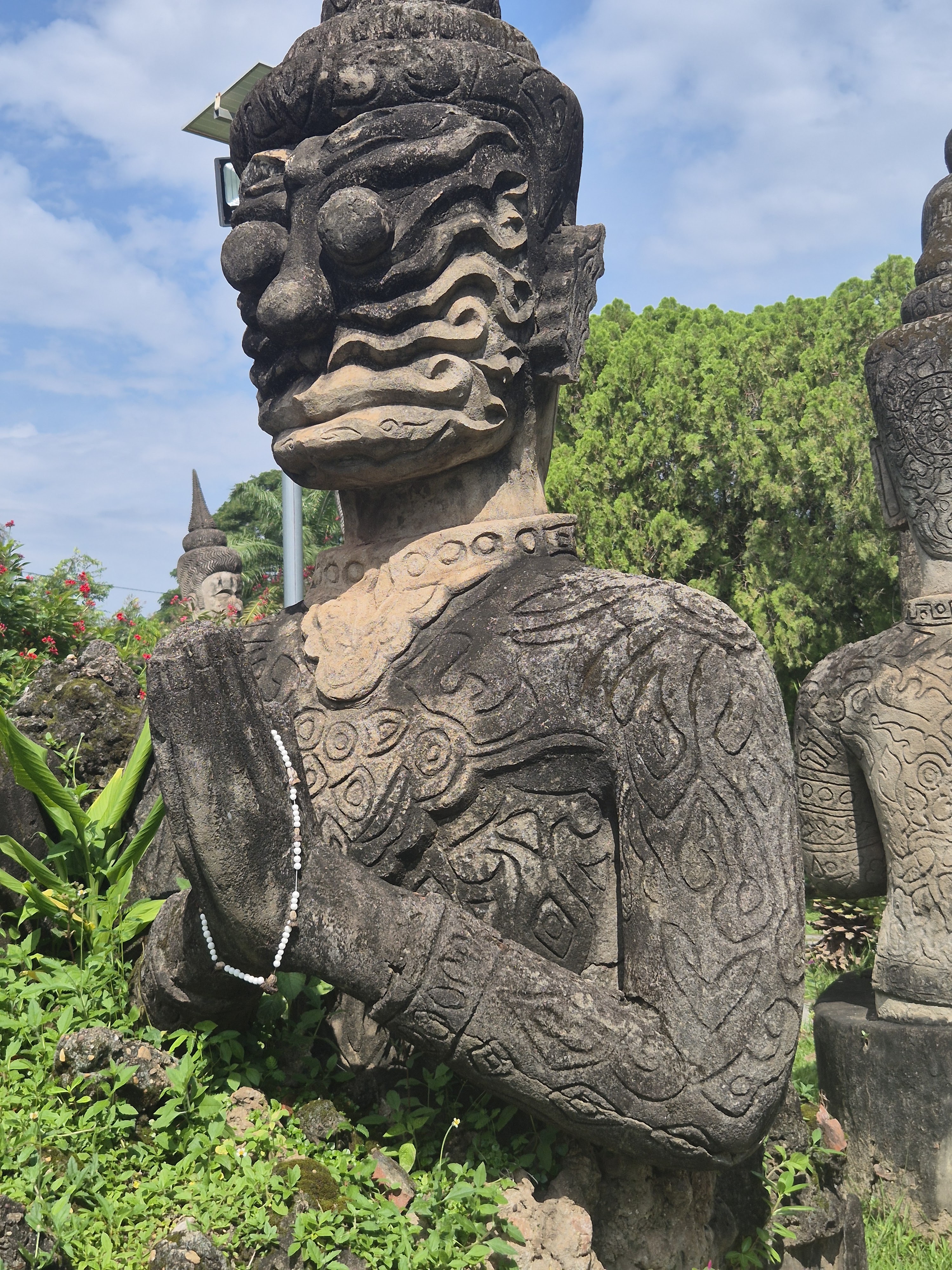
The park through the day — from misty morning to the statues in soft light.
Images are illustrative of the park's atmosphere and may vary by season and light.
Images are illustrative and for reference, not commercial.
Reviews
What visitors say
A snapshot of recent visitor impressions (summarised from public travel reviews).
Reviews summarised from independent travel platforms for reference
Weird and wonderful — climb it for the rooftop view
Huge and calm — easy to spend an hour here
Cool and quiet before the tour buses
Flat paths, kids loved the elephant
Soft morning light on the statues was worth the early start
Felt authentic, fewer crowds than city temples
Cheap drinks and snacks, bring cash
Busy on holidays, weekdays are calmer
Sources
Our references
This non-commercial guide compiles public information to help visitors plan responsibly.
Facts & data
Ratings, hours and coordinates are compiled from public sources and may change — please verify on site before you go.
Found a mistake?
We're a small non-commercial team. If something is wrong or outdated, let us know and we'll fix it.
Email us© 2026 Buddha Park guide · non-commercial visitor resource
Location & map
Find Buddha Park
In Deua village, Thanon Tha District, on Vientiane's eastern edge by the Mekong, near the Thai–Lao Friendship Bridge.
📍 Deua, Thanon Tha District, Vientiane, Laos
🧭 Plus Code WQ67+WW Vientiane
🌐 17.9124°N, 102.7622°E